

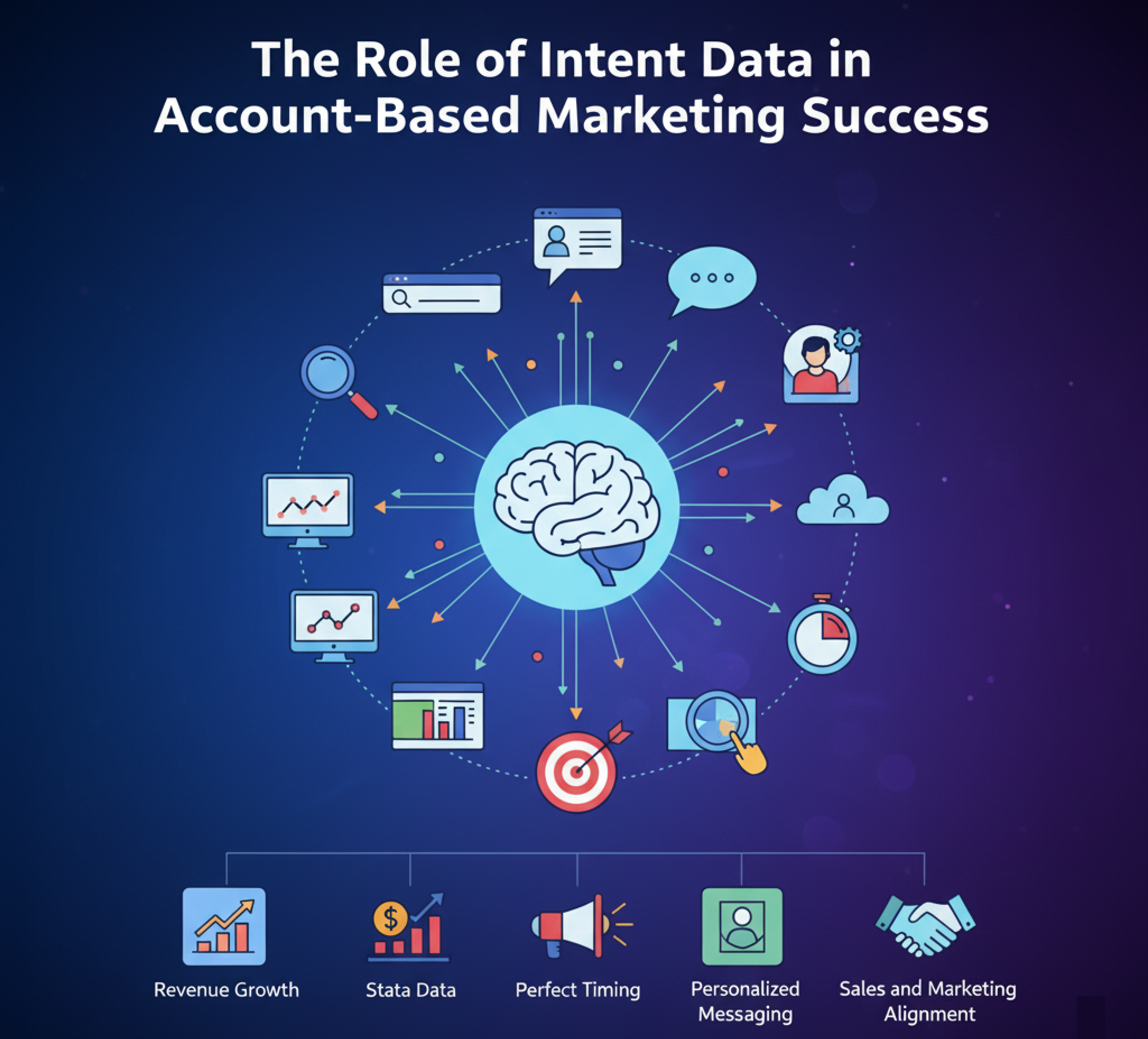
The Role of Intent Data in Account-Based Marketing Success
In the world of Account-Based Marketing (ABM), knowing who your target accounts are is only half the battle. The real game-changer is knowing what they’re thinking and when they’re ready to buy. This is where intent data comes into play, transforming ABM from an informed strategy into a truly predictive and proactive one.
Intent data provides crucial insights into a prospect’s research activities and content consumption across the web. It signals a company’s interest in specific topics, products, or services, indicating their potential readiness to make a purchase. Without intent data, even the most perfectly selected target account can be a shot in the dark. With it, you gain a significant competitive edge.
How Intent Data Fuels ABM Success:
- Early Identification of “In-Market” Accounts: Intent data acts as an early warning system. By tracking behaviors like increased searches for specific keywords, downloading whitepapers on relevant topics, or engaging with competitor content, you can identify accounts that are actively researching solutions long before they fill out a “contact us” form. This allows your sales and marketing teams to engage when the need is fresh and active.
- Hyper-Personalized Messaging and Content: Generic messaging falls flat. Intent data tells you exactly what topics an account is interested in, what challenges they might be facing, and what stage of the buying journey they’re in. This allows you to tailor your outreach, advertising, and content to address their specific needs and pain points, making your interactions far more relevant and impactful. If an account is heavily researching “cloud security solutions,” your messaging can directly address that need, rather than general IT issues.
- Optimized Sales Prioritization and Timing: Sales teams often struggle with prioritizing leads. Intent data provides a crucial layer of qualification, allowing sales to focus their efforts on accounts showing the highest buying intent. This means fewer wasted calls and more productive conversations. Moreover, it helps in timing outreach perfectly – reaching out when a prospect is most receptive, rather than cold calling.
- Enriched Account Profiles: Intent data adds a dynamic layer to your existing account intelligence. Combined with firmographic and technographic data, it creates a more comprehensive and actionable profile of each target account. This enriched understanding helps both marketing and sales craft more effective strategies, identify key stakeholders, and anticipate objections.
- Improved Collaboration Between Sales and Marketing: With shared intent data, sales and marketing teams can align their efforts more effectively. Marketing can nurture accounts with relevant content based on their intent signals, and then pass highly qualified, “warm” accounts to sales. This seamless handover, driven by data, fosters a more collaborative and efficient revenue generation process.
In essence, intent data is the intelligence that transforms ABM from a strategic framework into a high-performance revenue engine. It empowers teams to be proactive, personalized, and precise, leading to higher engagement, better conversion rates, and ultimately, greater ABM success.