
Direct answer
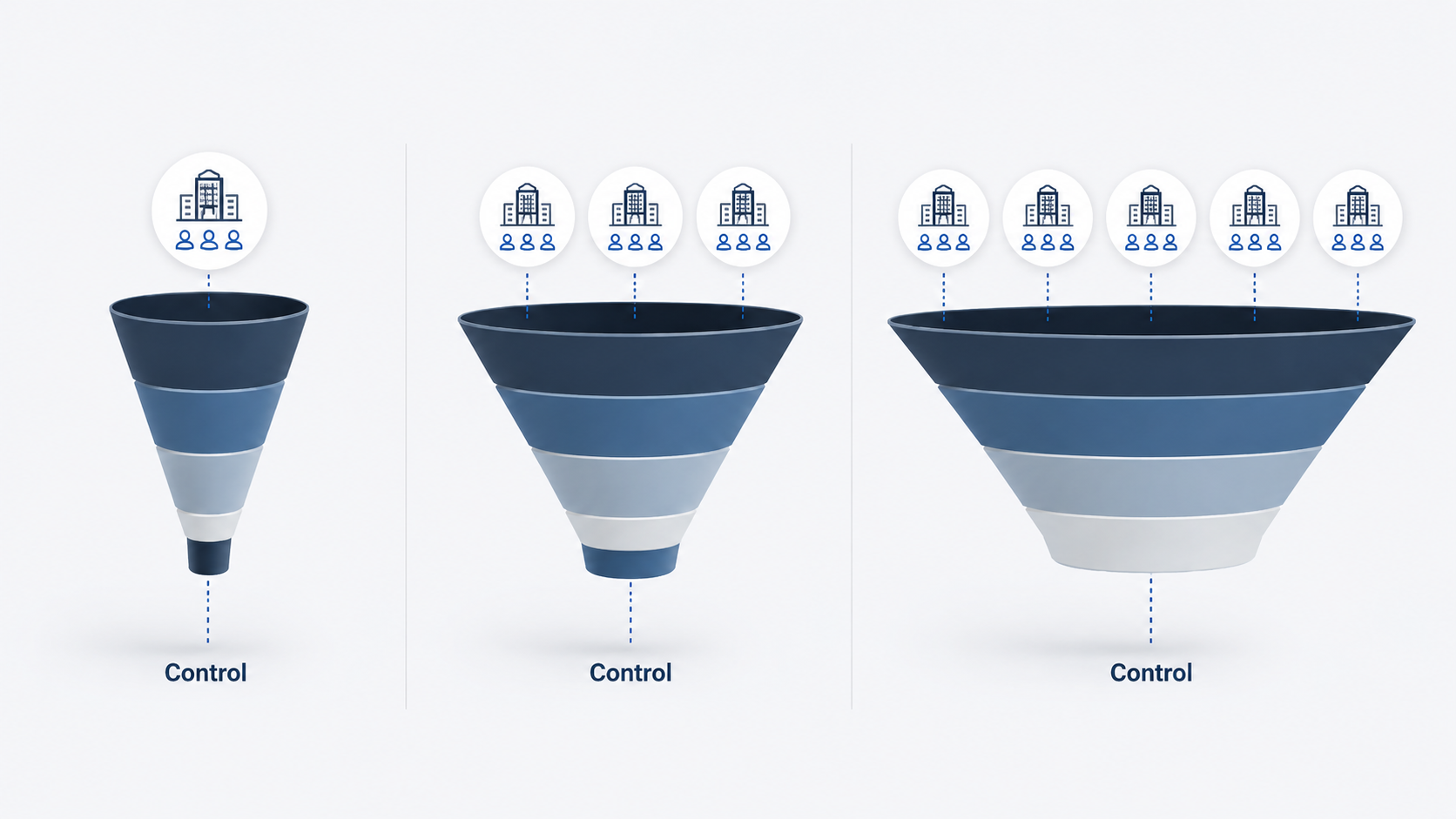
ABM and inbound marketing both support B2B growth, but they start from different places. Inbound marketing attracts a wider audience through content, search, education and conversion paths. ABM focuses sales and marketing around selected target accounts, buying groups and account progression.
Inbound marketing works well when a business needs organic visibility, education and demand capture. ABM works well when a business needs to win, grow or influence defined accounts with complex buying groups and higher commercial value.
In this article
- What inbound marketing is designed to do
- What account-based marketing is designed to do
- The difference between inbound demand and target account progression
- When inbound marketing works best
- When ABM works best
- How inbound supports ABM
- How ABM makes inbound more commercially focused
- Common mistakes to avoid
- How ABM Logic connects inbound content to account-based demand generation
Introduction: What inbound marketing is designed to do
Inbound marketing is designed to attract people who are already searching, learning or exploring a problem.
It usually uses content, SEO, social media, newsletters, guides, webinars, landing pages and nurture journeys. The aim is to bring potential buyers toward the business by being useful and visible when they are researching.
Inbound marketing can help B2B teams:
- Build organic visibility
- Educate the market
- Capture existing demand
- Generate inbound leads
- Support nurture journeys
- Create credibility before sales contact
- Identify recurring buyer questions
For ABM Logic, inbound is useful because a strong blog base creates market presence. It gives search engines, buyers and sales outreach more substance to work with.
What ABM is designed to do
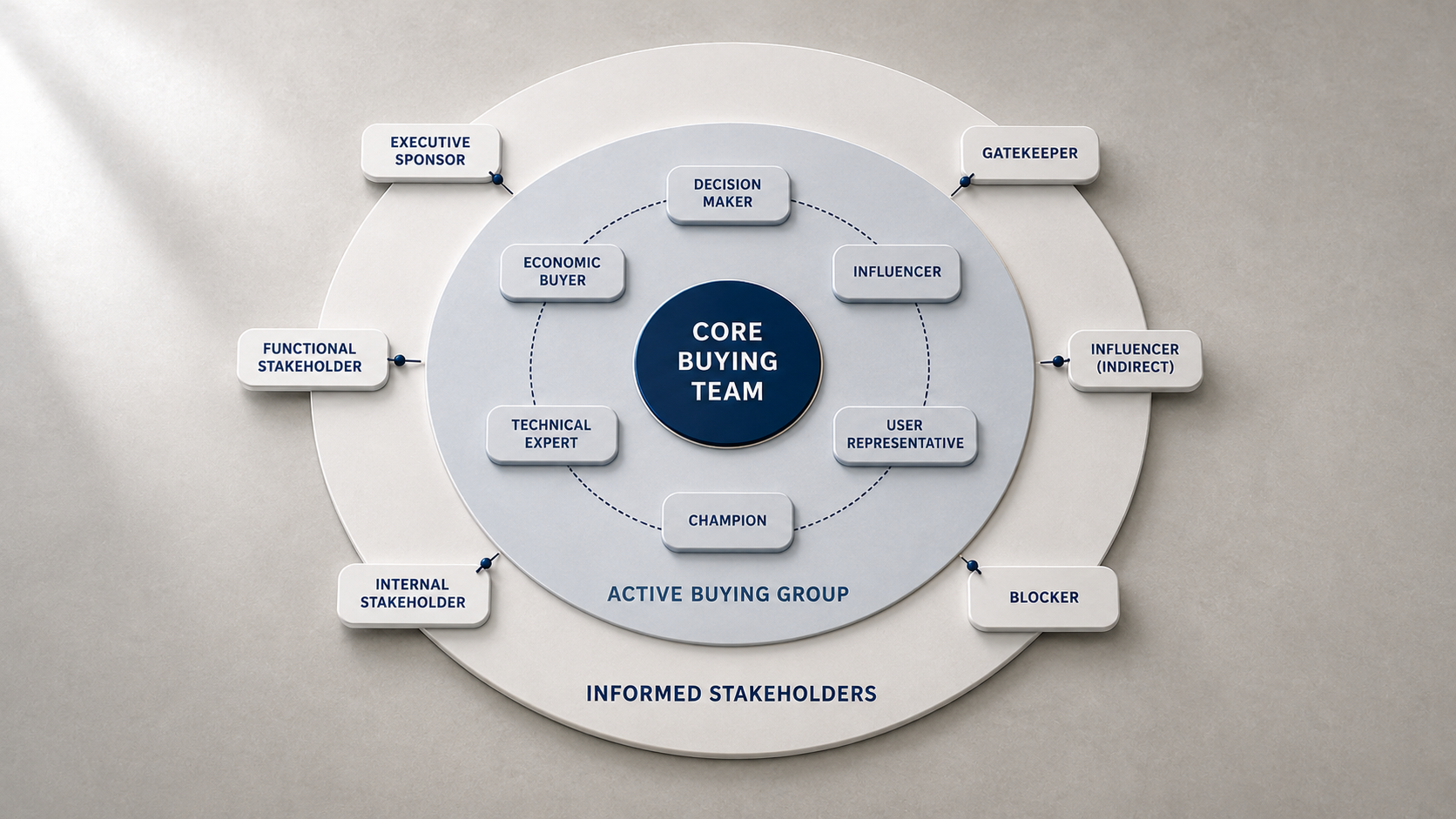
Account-based marketing starts with the account, not the anonymous visitor. ABM asks which companies the business wants to win, grow or influence. It then builds sales and marketing activity around those accounts, the buying group roles inside them and the signals that show account progression.
ABM can help teams:
- Select and tier target accounts
- Map buying group roles
- Create relevant account-based content
- Interpret leads as account signals
- Coordinate sales and marketing follow up
- Measure account progression
- Focus effort on higher-value opportunities
ABM is not only a channel strategy. It is a commercial focus strategy.
The key difference is the starting point
Inbound starts with market demand, whilst ABM starts with target accounts.
Inbound marketing asks what buyers are searching for and how the business can attract them. ABM asks which accounts matter and how the business can create relevant engagement inside those accounts. This difference changes the measurement model.
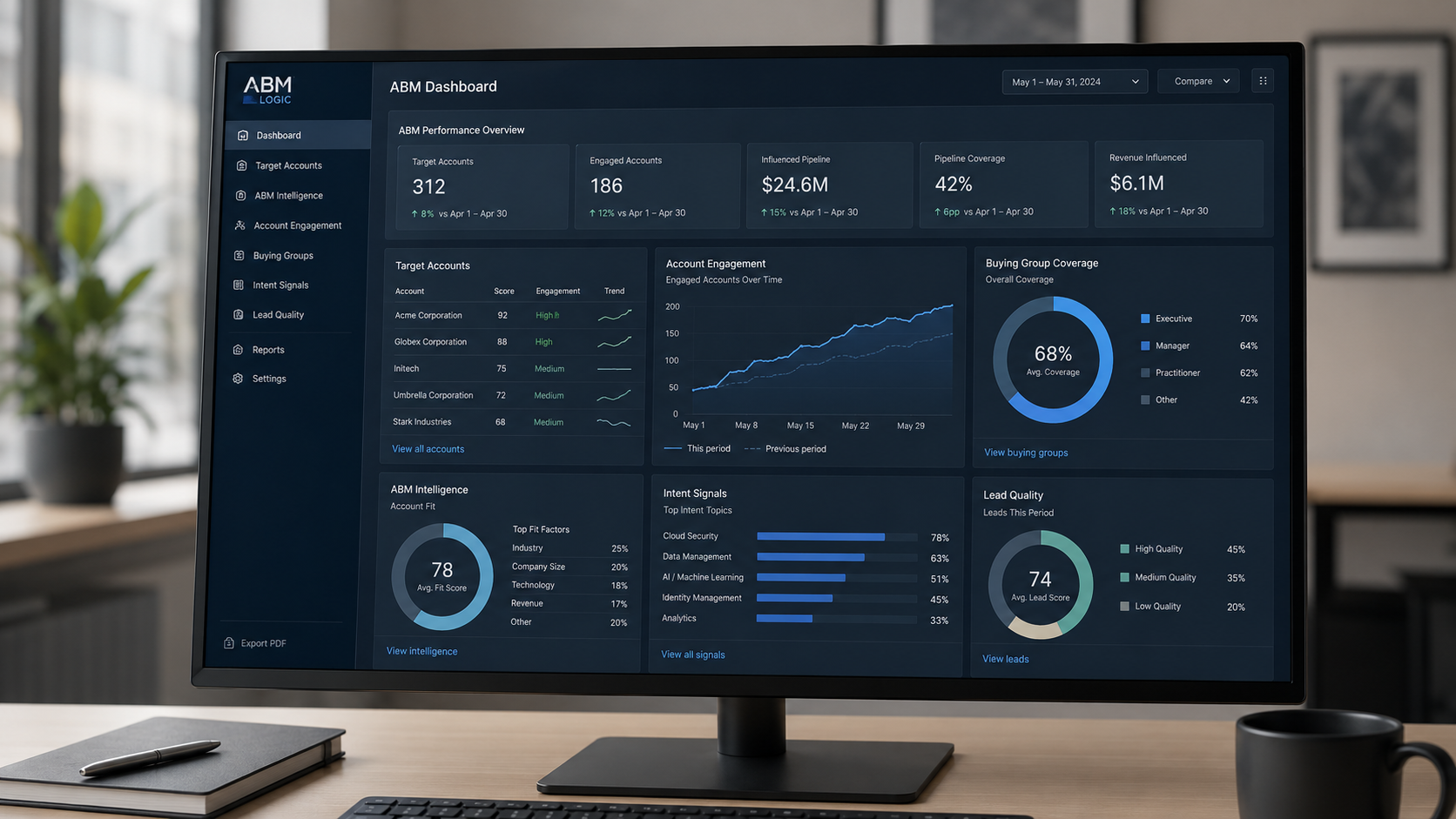
Inbound may measure traffic, rankings, conversions, leads and nurture performance. ABM should measure target account engagement, buying group coverage, sales acceptance, follow-up completion, meetings and pipeline progression.
Both measurement models are useful, but they answer different questions.
When inbound marketing works best
Inbound marketing works best when buyers are actively searching for information and the business has useful answers.
It is especially useful for:
- Top-of-funnel education
- Building organic search presence
- Answering common buyer questions
- Capturing early demand
- Supporting content-led nurture
- Creating credibility before outbound
Inbound is also useful because not every future buyer is already on a named target account list. Search and content can reveal interest from companies the business had not prioritised yet.
When ABM works best
ABM works best when the business knows which accounts matter and needs to focus commercial effort around them.
It is especially useful for:
- Strategic account growth
- Named account acquisition
- Complex B2B sales
- Longer buying cycles
- Multiple stakeholder buying groups
- High-value opportunities
- Account-based lead programmes
- Sales and marketing alignment
ABM is useful when the account list matters as much as the lead list.
How inbound supports ABM
Inbound and ABM should not be treated as opposites.
Inbound content can support ABM by creating useful educational assets, answering buyer questions and building credibility before direct engagement.
A target account may first discover a company through search. A sales team may use an inbound article in follow up. A content asset may create an early engagement signal from a relevant buying group role.
Inbound creates visibility, and ABM gives that visibility account-level direction.
How ABM improves inbound marketing
ABM can make inbound marketing more commercially focused.
Instead of writing only for broad traffic, teams can write for target account problems, buying group questions and pipeline progression.
This makes content more useful for sales and more connected to revenue.
It also helps avoid content production that creates visits but does not support the accounts or conversations the business cares about.
Common mistakes to avoid
The biggest mistake is expecting inbound to do ABM’s job.
Inbound can attract attention, but it does not automatically create target account progression. A blog visit, guide download or enquiry may be useful, but the team still needs to understand the account behind the action.
Useful points to consider are:
- Is this a target account?
- Is the role relevant?
- Is there buying group activity?
- Should sales act now or nurture?
- Does this engagement connect to pipeline progression?
Without account context, inbound leads can become disconnected from sales priorities.
What this means for B2B teams
The strongest B2B demand engine often combines inbound and ABM.
Inbound helps create discoverable, useful content. ABM helps direct commercial effort toward the accounts that matter most. Together, they can support education, signal creation, sales follow up and pipeline progression.
How inbound and ABM can work together
The strongest model often uses inbound and ABM together.
Inbound creates discoverable content that answers buyer questions. ABM uses that content inside a focused account strategy.
For example, an educational blog may attract a visitor from a company that is not yet on the target account list. If the account fits the ICP, that engagement can become a reason to review the account. The same article may also be used by sales when following up with a named account. It may support retargeting, nurture or a content syndication campaign.
The asset does not need to serve only one purpose.
A good inbound asset can support search visibility, buyer education, sales follow-up and account-based signal generation.
This is why content planning should not be split too rigidly. Some content should be written for search demand. Some should be written for target account problems. The best pieces often do both.
A simple decision guide
Inbound is usually the better starting point when the business needs more market visibility.
Use inbound when:
- Buyers are actively searching for answers
- The business needs organic visibility
- The topic has clear search demand
- The audience is broad enough to justify publishing
- The content can support nurture or sales education
ABM is usually the better starting point when the business knows which accounts matter.
Use ABM when:
- The target account list is defined
- Deal value justifies focus
- Buying groups are complex
- Sales needs help opening or progressing accounts
- Lead quality matters more than broad volume
- The business needs coordinated sales and marketing action
It is important to note that the decision is not permanent. A business may start with inbound to build visibility, then use ABM to focus engagement around priority accounts.
How to connect inbound leads to account context
Inbound leads should not be treated as isolated contacts. When someone engages with inbound content, the team should ask whether the person belongs to an account that matters.
Useful checks include:
- Does the company fit the ICP?
- Is the person in a relevant role?
- Has the account engaged before?
- Is the topic connected to the offer?
- Is there sales ownership?
Should the lead go to nurture, account review or direct follow-up?
This turns inbound from a passive lead source into a source of account intelligence.
The goal is not to make every inbound visitor part of an ABM programme. The goal is to spot the inbound signals that deserve account-based attention.
Why this matters for content planning
The difference between ABM and inbound should shape the content plan.
Inbound content should answer the questions buyers are already searching for. It should build organic visibility, explain core concepts and create useful market education.
ABM content should support target account engagement. It should help sales speak to specific account problems, buying group roles and commercial priorities.
A strong content plan usually needs both.
Some articles should be built for discoverability. Others should be built for sales enablement, campaign activation or stakeholder education. The same content can sometimes serve both purposes, but the team should still be clear about the primary job.
This prevents random content production.
Each article, guide or resource should have a role in either market visibility, account engagement, buying group education, lead qualification or pipeline progression.
What this means for ABM Logic’s approach
For ABM Logic, inbound content and ABM should support each other.
Inbound helps build authority, educate buyers and create search visibility around account-based marketing, demand generation, lead quality, content syndication and pipeline progression. ABM then gives that visibility a commercial direction by connecting engagement back to target accounts, buying groups and sales follow-up.
This matters for B2B teams that cannot rely on one channel alone.
Search can create credibility. Content can educate the market. Account-based programmes can turn relevant engagement into qualified signals. Sales can then act with better context.
The operating model is stronger when these parts are connected.
Practical example: one blog post supporting inbound and ABM
A single blog post can support both inbound marketing and ABM if it is planned properly.
For example, a B2B technology company might publish an article called “How to Reduce Risk During ERP Migration”. From an inbound perspective, the article can attract buyers searching for ERP migration advice, implementation risk, change management or business case guidance.
From an ABM perspective, the same article can be used differently.
It can be sent to selected target accounts that are known to have legacy ERP systems. It can be used in LinkedIn outreach to finance, IT and operations stakeholders. It can support a content syndication campaign aimed at companies showing ERP or digital transformation signals. It can also give sales a reason to follow up when a target account engages.
The inbound value is search visibility and buyer education, and the ABM value is account-level signal creation and sales context.
This is where the two approaches work best together. Inbound creates useful content and discoverability. ABM applies that content to the accounts, buying group roles and commercial opportunities that matter most.
ABM Logic point of view
ABM Logic sees inbound and ABM as connected parts of a wider demand system.
Inbound builds search visibility, buyer education and content credibility. ABM gives that activity account-level direction by connecting the right content to target accounts, buying groups and sales follow-up.
The strongest model is not content written for traffic alone. It is content that educates the market while also creating useful account signals and supporting pipeline progression.
FAQs about ABM vs inbound marketing
What is the difference between ABM and inbound marketing?
Inbound marketing attracts a wider audience through content and search. ABM focuses sales and marketing around selected target accounts and buying groups.
Is ABM better than inbound marketing?
ABM is not automatically better. It is better when the business needs to focus on defined accounts, complex buying groups and higher-value opportunities.
Can inbound marketing support ABM?
Yes. Inbound content can support ABM by creating useful educational assets, search visibility and engagement signals from target accounts.
How should ABM and inbound be measured?
Inbound is often measured by traffic, rankings and conversions. ABM should be measured by target account engagement, buying group coverage, sales acceptance and pipeline progression.
Final thoughts
ABM vs inbound marketing is not a question of which approach is better. It is a question of which job needs doing.
Inbound marketing builds visibility, education and demand capture. ABM focuses that activity around target accounts, buying groups and account progression.
For ABM Logic, inbound content is part of the wider account-based demand generation system. It creates useful search presence and buyer education, while ABM turns the right signals into sales action.
Explore how ABM Logic structures our account-based programmes and our account-based lead programmes around target accounts, buying groups and qualified account signals, so inbound content can support account engagement rather than sit separately from sales activity.