
Using ABM to Grow an Existing Customer Account
For marketing teams supporting account expansion, an established relationship helps, but a new buying group still needs its own reason to consider you.

For marketing teams supporting account expansion, an established relationship helps, but a new buying group still needs its own reason to consider you.

For B2B marketing teams organising a roundtable, workshop or webinar, plan the account conversation before building the invitation list.

For ABM managers deciding where to focus limited effort, a priority list should explain why an account deserves attention and what to do next.

A priority account can justify a dedicated campaign, but its size alone is not a business case. Assess the opportunity with sales before approving the work.

For B2B marketing teams with more priority accounts than they can support individually, the right grouping makes a shared campaign relevant.
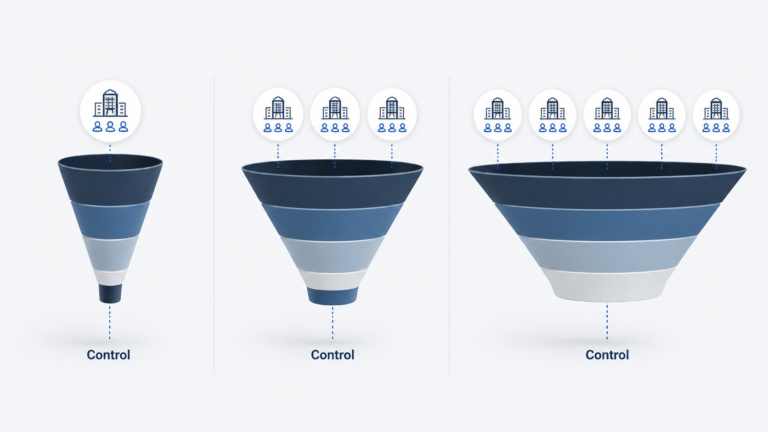
Scale ABM with an account-tier operating model that defines treatment, ownership, buying-group coverage and review decisions without losing relevance.

Compare ABM and inbound marketing, decide when each approach fits, and see how search-led content can support engagement with target accounts.
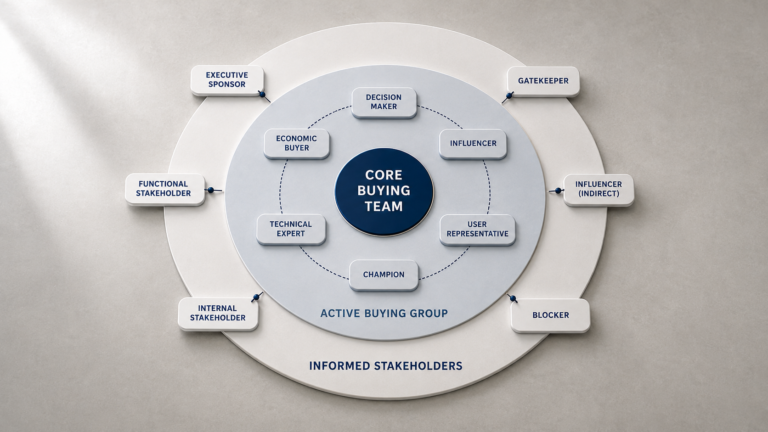
Identify the decision-makers, evaluators, champions and other roles in an ABM buying group, then map contact gaps and plan relevant follow-up.

Assess buying-group coverage across target accounts and use stakeholder engagement to guide qualification, sales follow-up and account progression.

Align sales and marketing around target accounts, qualified signals, ownership and follow-up. Use workshop questions and shared measures to make the agreement practical.