
Direct answer
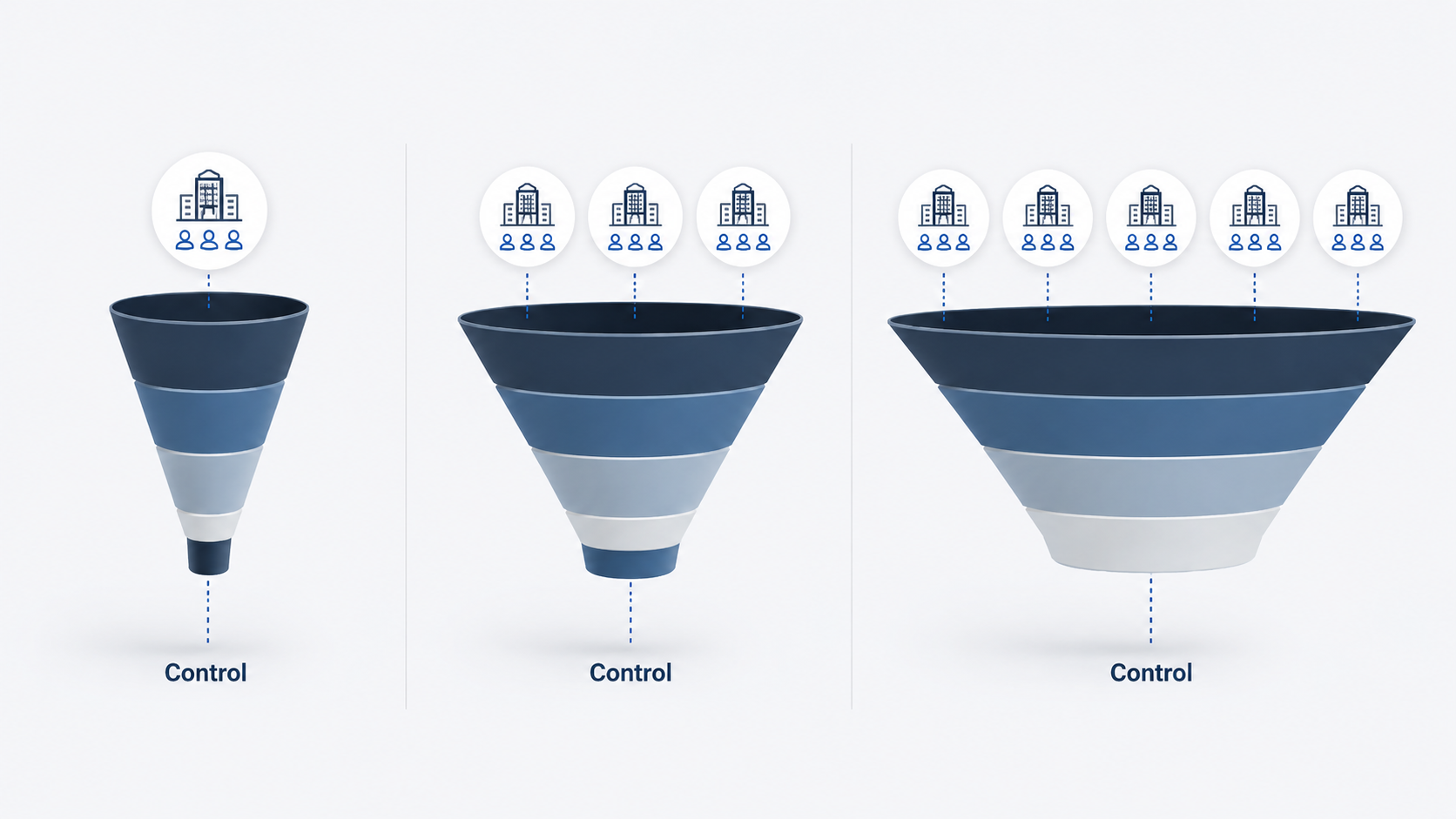
Buying groups in ABM are the groups of people inside a target account who influence, evaluate, approve, block or use a product or service. In complex B2B sales, one lead rarely represents the whole opportunity. A buying group may include senior decision-makers, functional owners, technical evaluators, finance stakeholders, procurement, users, influencers and internal champions.
In account-based marketing, buying groups matter because ABM is focused on accounts, not isolated contacts. The goal is to understand which roles are involved in the buying process and how engagement from different stakeholders reveals account-level interest.
In this article
- What buying groups mean in ABM
- Why one lead is rarely enough
- The common roles inside a B2B buying group
- How buying groups affect target account selection
- How buying groups shape ABM content and messaging
- How buying group data improves lead qualification
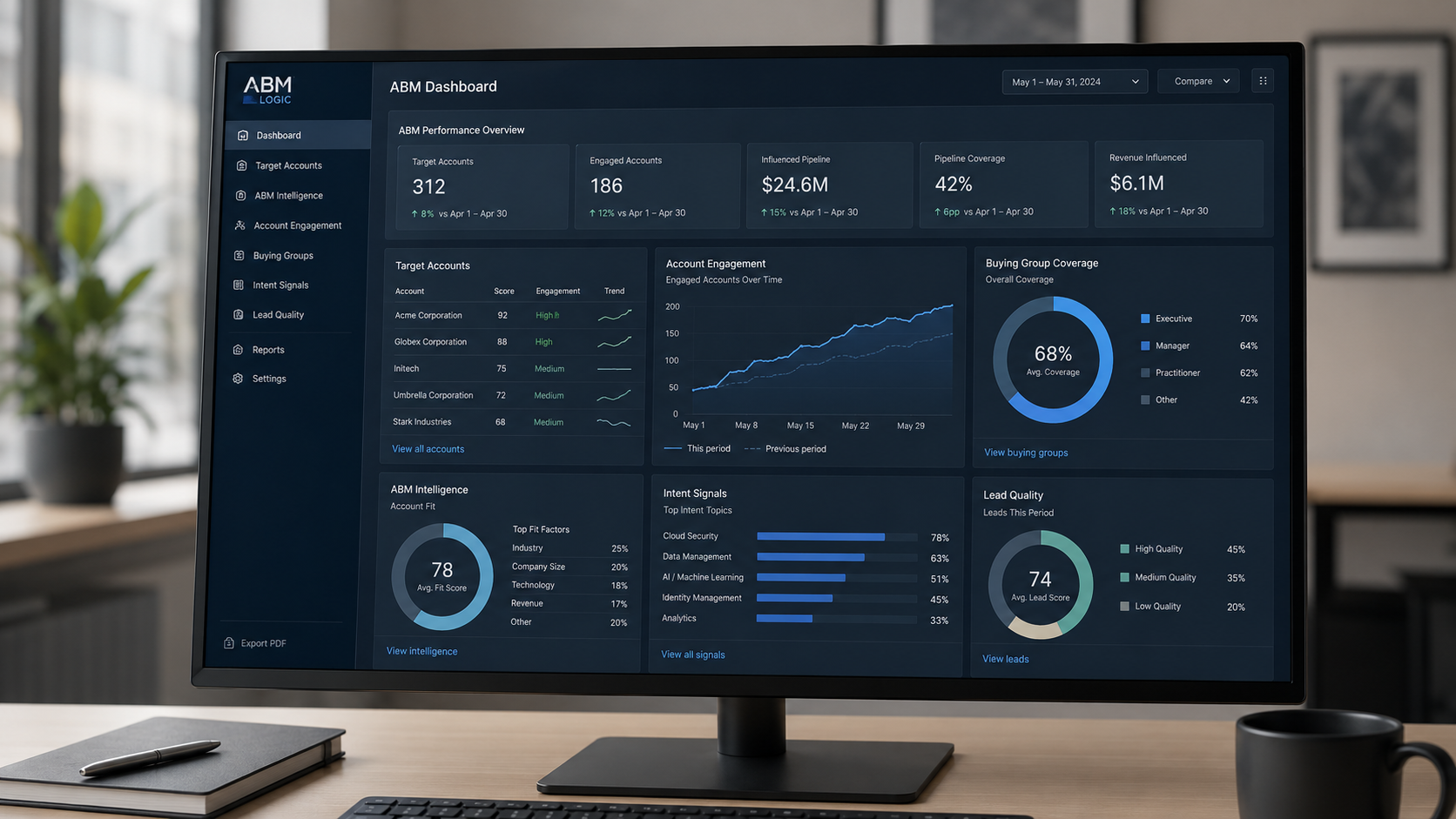
- What to measure when tracking buying group coverage
- Common mistakes to avoid
- How ABM Logic connects buying groups to pipeline progression
Introduction: What buying groups mean in ABM
Account-based marketing starts with the account, but accounts do not make decisions by themselves.
People inside those accounts make decisions. Different people care about different risks, outcomes and evidence. A senior leader may care about commercial value. A technical evaluator may care about integration. A finance stakeholder may care about cost and risk. A user may care about day-to-day impact.
A buying group is the collection of people who influence that decision.
ABM uses buying groups to understand the human structure behind the account. This matters because engagement from one person does not always mean the account is ready to move forward.
Why one lead is rarely enough
A single lead can be useful, but it rarely tells the full story.
One person may download a guide because they are researching. Another may attend a webinar because they are curious. A third may visit a website because they were asked to review a vendor.
The real question is whether the engagement connects to a wider account pattern.
A lead from a junior contact may need nurture. A lead from a functional owner may be more useful. Engagement from several roles inside the same account may be stronger still.
This is why ABM Logic treats leads as account-level signals. The lead matters, but the account and buying group context determine what the lead means.
Common buying group roles
A B2B buying group usually includes several different roles.
Economic decision-maker
The economic decision-maker has budget authority or significant approval influence. This person may not engage with every early piece of content, but they often matter when the decision becomes more serious.
Functional owner
The functional owner is responsible for the business problem the solution addresses. This role often cares about operational outcomes, team impact and practical improvement.
Technical evaluator
The technical evaluator assesses feasibility, integration, architecture, security, data and operational fit.
Operational user
The operational user is the team or individual who will use the product or be affected by the change.
Finance stakeholder
The finance stakeholder reviews cost, return, budget and commercial risk.
Procurement stakeholder
The procurement stakeholder manages supplier process, contracts, purchasing rules and vendor risk.
Influencer or champion
The influencer or champion supports the idea internally and helps move the conversation forward.
Blocker
The blocker may slow, resist or reject the decision. Blockers matter because they can stop progression even when other stakeholders are positive.
Not every deal has all of these roles, and not every role has equal power. But the principle is important: B2B buying usually involves more than one stakeholder.
Why buying groups matter in account-based marketing
Buying groups matter because ABM is designed around account progression. If an ABM campaign only reaches one person, the account view is shallow. If the campaign reaches several relevant roles, the team has a better sense of whether the account is becoming engaged.
Buying group visibility helps answer:
- Which roles matter in this account?
- Which contacts are already known?
- Which roles are missing?
- Who owns the business problem?
- Who could approve or block progress?
- Which stakeholders are engaging with content?
- What does sales already know about the account?
This makes the account more actionable.
Buying groups and target account selection
Buying group visibility can affect target account selection.
An account may look attractive on paper, but if the relevant stakeholders cannot be identified or reached, execution becomes harder. Another account may be slightly smaller but have clearer stakeholder visibility, stronger engagement and a better route to follow up.
Strong ABM uses buying group data to understand whether an account can realistically be engaged.
That does not mean rejecting every account with limited contact coverage. It means knowing where the gaps are before campaign activity begins.
Buying groups and ABM content
Buying groups also shape content strategy; simply put, different stakeholders need different messages.
A CFO may need commercial risk and return. An IT leader may need architecture, data or security reassurance. A functional leader may need operational outcomes. A user may need practical clarity.
This does not mean creating unlimited content for every person. It means building modular content and messaging that reflects buying group roles.
For example, one campaign theme can have several role-specific angles. The core problem stays the same, but the evidence and message change depending on the stakeholder.
Buying groups and lead qualification
Buying group context improves lead qualification.
A lead should not be judged only by form completion. It should be assessed by account fit, role relevance, engagement topic and wider stakeholder activity.
A lead from a relevant buying group role inside a target account is usually stronger than a lead from an irrelevant role outside the account universe.
Multiple engaged stakeholders from the same account may indicate stronger account movement. That does not guarantee a buying process, but it does give sales and marketing a better reason to review the account.
What to measure
Sound buying group measures include:
- Stakeholder coverage
- Roles engaged
- Seniority mix
- Repeat engagement
- Content engagement by role
- Missing roles
- Sales follow-up status
- Meetings created from buying group engagement
The goal is not to fill a contact database. The goal is to understand whether the right people are becoming visible and whether the account is becoming more actionable.
Common mistakes to avoid
Common mistakes include targeting only one persona, treating one lead as the whole opportunity, ignoring technical or finance stakeholders, failing to update account maps and passing leads to sales without buying group context.
These mistakes create a shallow account view. ABM needs a deeper account view if it is going to support meaningful pipeline progression.
How to map a buying group in practice
Buying group mapping does not need to be perfect before an ABM programme starts, but it does need to be useful.
The first step is to define the roles likely to influence the decision. Then the team can identify known contacts, missing contacts and engagement signals by role.
A practical buying group map might include:
- Economic buyer
- Senior sponsor
- Functional owner
- Technical evaluator
- Finance stakeholder
- Procurement stakeholder
- Operational user
- Influencer or champion
- Known blocker
For each role, the team should ask whether a contact is known, whether that person has engaged, whether sales has a relationship and whether the role needs specific content or messaging.
This process turns a contact list into an account view.
How buying group mapping improves sales follow-up
Sales follow-up improves when the rep understands where the contact sits in the buying group.
A message to a functional owner should not sound the same as a message to a technical evaluator or finance stakeholder. Each role has a different reason to care.
Buying group context helps sales decide:
- Whether the contact is likely to influence the decision
- Whether the message should be educational, commercial or technical
- Whether another stakeholder should be introduced
- Whether the account needs nurture or direct follow-up
- Whether the lead is part of a wider account pattern
This is especially important in account-based lead generation. A lead from a target account is more useful when sales knows what role that person may play.
How buying groups change reporting
Buying group reporting is more useful than simple lead volume.
A campaign may produce many leads, but if all the leads come from the same low-influence role, the account may not be progressing. Another campaign may produce fewer leads but reach several relevant stakeholders across a smaller number of target accounts.
That second outcome may be more valuable.
Impactful reporting should show:
- Which roles are known
- Which roles are engaged
- Which roles are missing
- Which accounts have multiple stakeholders engaged
- Which content topics are engaging each role
- Which accounts need sales review
This gives sales and marketing a clearer view of account depth.
Example: a buying group in a B2B SaaS sale
A buying group is easier to understand when applied to a real B2B sale.
Imagine a SaaS company selling a customer data platform to a mid-market software business.
- The economic buyer might be the Chief Revenue Officer or Chief Marketing Officer because they own growth targets and budget influence.
- The functional owner might be the Head of Marketing Operations because they understand the day-to-day data problem and will be responsible for making the system useful.
- The technical evaluator might be the Head of Data, IT or RevOps because they need to assess integration, security, data flow and system fit.
- The operational users might be campaign managers, sales operations, customer success or demand generation teams who will use the data in daily workflows.
- The finance stakeholder may want to understand cost, return and budget impact.
- Procurement may review supplier risk, contract terms and purchasing process.
- An internal champion might be a marketing operations leader who believes the current data process is limiting campaign performance.
- A blocker might be an IT leader who is worried about integration complexity or another department that prefers the current system.
This example shows why one lead is rarely enough. A download from the marketing operations leader may be useful, but the opportunity will probably need technical, financial and senior commercial support before it progresses.
ABM helps sales and marketing see this wider stakeholder picture.
ABM Logic point of view
ABM Logic’s view is that buying group coverage is one of the main differences between generic lead generation and account-based lead generation.
One contact can be useful, but one contact rarely explains the whole account. Buying group visibility helps sales and marketing understand whether engagement is isolated or whether the account is becoming more commercially active.
This is why ABM Logic looks at role relevance, stakeholder depth and account context as part of lead quality.
FAQs about buying groups in ABM
What is a buying group in ABM?
A buying group is the group of stakeholders inside a target account who influence, evaluate, approve, block or use a product or service.
Why do buying groups matter in ABM?
Buying groups matter because ABM focuses on account progression, not just individual lead activity. Multiple relevant stakeholders can show stronger account movement.
Is one lead enough in ABM?
One lead can be useful, but it is rarely enough to understand the whole opportunity. Buying group context shows whether the account has wider engagement.
How should buying group coverage be measured?
It can be measured by stakeholder coverage, roles engaged, seniority mix, missing roles, repeat engagement and follow-up actions from the account.
Final thoughts
Buying groups are central to ABM because complex B2B decisions are rarely made by one person.
A strong account-based marketing programme should understand which roles matter, which stakeholders are visible, which contacts are engaging and what sales or marketing should do next.
For ABM Logic, buying groups connect lead quality, account intelligence and pipeline progression. One lead may open the door, but buying group coverage shows whether the account has the depth needed for serious commercial movement.
Explore how ABM Logic structures our account-based programmes and our account-based lead programmes around target accounts, buying groups and qualified account signals, so one lead is understood in the context of the wider buying group.