

In brief
Choose a white-label lead generation partner by checking targeting, acceptance criteria, QA evidence, reporting and replacement rules. The agency remains accountable to its client, so agree responsibilities and test delivery through a controlled pilot before increasing volume.
White label lead generation is B2B lead generation delivered by a third party while the agency remains the visible client partner. Choose a fulfilment partner by checking the delivery model: agreed targeting and acceptance criteria, QA evidence, reporting visibility and clear rejection and replacement rules. See how delivery quality and reporting came together in our media house campaign case study.
When a supplier works behind your brand, the client rarely distinguishes between the agency and the fulfilment layer. The agency needs to defend what was delivered and keep control of the client relationship, rather than judge the partner by lead volume alone.
How To Choose A White Label Lead Generation Partner
Choose a white label lead generation partner by judging the delivery model, not only the lead number.
A good B2B fulfilment partner works to agreed criteria, checks leads before handoff, reports clearly, handles rejected leads against defined rules and gives the agency enough visibility to manage the client review conversation.
Before choosing a partner, agree:
- which accounts, sectors, geographies and company types are in scope
- which roles, seniorities and functions qualify
- what counts as a valid lead for this campaign
- what source, consent and contact information must be visible
- what QA happens before delivery
- what reporting fields the client will see
- what counts as a valid rejection
- how replacements will be handled
- what a pilot needs to prove before scale
The decision is commercial as much as operational. A weak supplier creates review time, margin pressure and client-service risk. A stronger partner makes fulfilment easier to explain, challenge and improve.
What White Label Lead Generation Means For Agencies
White label lead generation is B2B lead generation delivered by a third party while the agency remains the visible client partner.
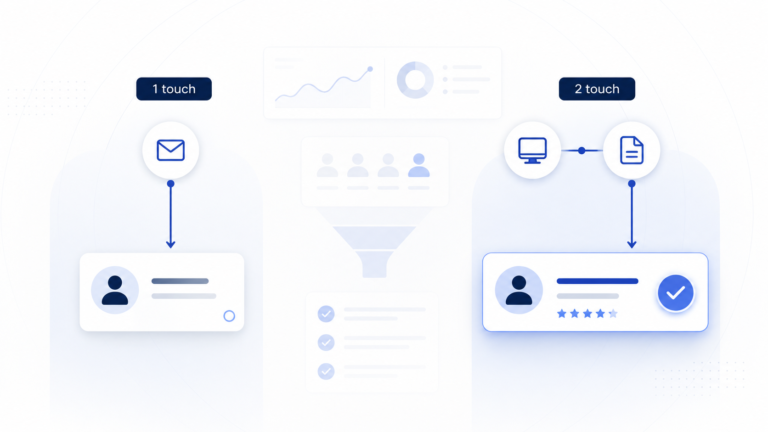
For agencies, it can include contact research, lead validation, enrichment, content-led demand generation, B2B content syndication and account-based marketing, MQL-style programmes, single-touch or double-touch leads, QA and reporting support.
Those labels need definition before delivery starts. ABM Logic has a separate explainer for MQL, HQL and SQL lead definitions, but the agency-side point is simpler: if the client hears “qualified lead”, the agency needs to know exactly what has been checked and what has not.
White label fulfilment is different from buying a generic lead file. The agency already owns the client promise, the commercial context and the follow-up expectation. The fulfilment partner works inside that relationship, even when the client never sees the partner’s name.
That makes process control part of the product.
A useful partner can work from client-specific criteria, explain how lead quality is checked, support a reviewable pilot and report in a way the agency can use in a client conversation. Blind supply is different. It may deliver names, but it leaves the agency to prove why those names belong in the campaign.
Why Cheap Volume Can Become Expensive
Cheap lead volume is attractive until the first weak batch lands with the client.
A poor-fit contact can trigger a bigger question: “Why did you send this to us?” A duplicate can make the client doubt the whole file. Thin source notes can create a governance concern. Weak reporting can leave the agency defending work it cannot properly explain.
The client usually does not care which supplier made the mistake. They see the agency.
That is the real cost of weak white label lead generation. The agency pays in review time, senior escalation, margin pressure and lost confidence in the delivery model. Even when the supplier replaces leads, the agency still spends time explaining the issue and rebuilding confidence in the campaign.
A stronger fulfilment partner reduces avoidable uncertainty. It does not need to promise perfect outcomes. It needs to make the work clearer, more controlled and easier to review.
That means defining lead quality and pipeline in practical terms: account fit, role fit, source evidence, contact validity, required fields, engagement context, acceptance criteria and reporting visibility.
White Label Lead Generation Agency vs B2B Fulfilment Partner
The phrase white label lead generation agency is common, but it can hide an important difference.
A basic white label lead generation agency may sell delivery under another brand. A B2B fulfilment partner works more deeply inside the agency’s delivery standards.
The difference shows up before launch.
A basic supplier may ask for a topic, geography and lead number. A stronger fulfilment partner asks for the criteria that determine whether the lead file will be defensible:
- which accounts and sectors are in scope
- which accounts are excluded
- which roles and seniorities matter
- which lead type is being delivered
- which fields must be complete
- what counts as duplicate, invalid or out of scope
- what evidence the agency will need if the client challenges quality
Agencies evaluating agency lead generation fulfilment need to judge accountability as much as output. A partner that cannot explain its controls before launch will be harder to defend after delivery.
What To Agree Before Delivery Starts
The agency, client and fulfilment partner need the operating rules agreed before the first file arrives.
This does not need to become a heavy process document. It does need to remove the obvious ambiguity.
Illustrative responsibility split: agree the actual arrangement before launch; this is not an ABM Logic service commitment.
| Party | Illustrative responsibility | Evidence to agree |
|---|---|---|
| Client | Approve audience and acceptance criteria; provide exclusions. | Signed-off brief and reasons for disputed records. |
| Agency | Own the client brief, supplier coordination and dispute review. | One agreed criteria version and a decision log. |
| Fulfilment partner | Check records against that brief and supply delivery evidence. | Source and QA notes; any replacement decision under agreed rules. |
The Brief
The brief should define the client’s ICP, target-account rules, sectors, geographies, company-size bands, excluded accounts, required fields and campaign source.
If the agency cannot define those points, the supplier will fill the gaps. That is where rejected batches and awkward review calls usually begin.
Account And Contact Fit
Account fit cannot be assumed from a company name. The partner needs to check sector, size, geography, account list, exclusion list and domain logic against the agreed rules.
Contact fit needs the same discipline. A valid person record is not automatically a useful lead. Role relevance, seniority, function, region and minimum fields all need to match the campaign brief.
Ambiguous titles should not be hidden in the file. They should be reviewed, flagged or handled against agreed judgement rules before the client sees them.
Source, Consent And Handling
Agencies need careful language here. No supplier can remove every legal or compliance question from a campaign, and the agency still needs its own governance and client-specific review.
The partner should provide clear visibility into source, consent basis, data handling and suppression rules. Avoid blanket compliance claims. The safer standard is reviewable evidence, responsible handling and clear limits on what the agency can say to the client.
QA Before Handoff
QA belongs before client handoff, not after a rejected batch.
Useful QA checks include account fit, contact role, seniority, geography, duplicates, required fields, business email and domain, exclusion lists, lead source and campaign engagement where that is part of the lead type.
Borderline cases matter most. A vague job title, regional role, parent-company domain or near-fit contact can create the escalation. The partner needs a practical way to handle those judgement calls before the file reaches the client.
Reporting
Reporting is where hidden fulfilment quality becomes visible.
At minimum, the agency needs reporting that explains what was delivered and why it fits the brief: campaign, batch, company, domain, sector, geography, role, seniority, lead type, source, validation status, QA notes, rejection reason and replacement status where relevant.
Lead count alone is not enough. It does not help the agency explain why a contact was delivered or what the client should do next.
Rejection And Replacement Rules
Rejected leads do not always mean the supplier failed. Sometimes the brief was loose. Sometimes the client changes its mind. Sometimes a title is ambiguous. Sometimes the supplier missed the agreed criteria.
The agency needs rules for which of those situations qualifies for replacement.
Agree valid rejection reasons, evidence requirements, response windows, replacement scope, disputed-lead logging and who makes the final call when criteria are unclear. Do not rely on open-ended replacement promises. They sound reassuring before launch and become painful when the first dispute starts.
Fictional rejected-record example: a client rejects a contact as outside the agreed geography. The agency checks the approved brief and asks the fulfilment partner for the location and QA evidence. If the record fails the agreed rule, the parties apply their documented replacement terms. If the client has changed the criterion since launch, the agency records the change and agrees how it applies before requesting further delivery.
Why A Pilot Should Come Before Scale
A pilot is the safest way to test the operating relationship before the agency commits client confidence to larger delivery.
The pilot should test whether:
- the brief is clear enough
- the partner understands the acceptance criteria
- QA happens before delivery
- the lead file has enough detail
- reporting supports client review
- rejected leads can be handled without confusion
- the agency can defend the work internally and with the client
The right pilot question is not only “did we get enough leads?”
It is: did this process give us enough control to trust the next stage?
If the answer is no, scale will usually make the problem louder. Tighten the brief, adjust the criteria or change the supplier before increasing volume.
Red Flags To Watch For
Be cautious when a partner leads with volume before criteria, price before fit or guaranteed outcomes before understanding the brief.
The strongest warning signs are:
- guaranteed meetings, pipeline or client acceptance
- unlimited replacements with no rules
- vague source or consent language
- no sample reporting fields
- no clear QA steps
- no distinction between a contact and a lead
- pressure to scale before reviewing a pilot
- resistance to documenting acceptance criteria
- no clear owner for issue handling
- no way to explain borderline cases
- little interest in how the agency will explain delivery to the client
These warning signs do not always mean the supplier is unusable. They mean the agency needs stronger controls before putting the client relationship behind the supplier.
Before you promise the client a delivery date
Ask your fulfilment partner to show what happens when the audience is harder to reach than expected. Which criteria stay fixed, which can be discussed, and who gets to approve a change? A wider audience may make the delivery total easier to hit while making the work less useful to your client.
Our delivery methodology puts the audience, qualification and delivery requirements into the brief together. Use that as a starting point for your supplier conversation. Agree how exceptions reach you before you pass a firm promise to the client.
How ABM Logic Fits
Need a delivery partner for a live client brief? Explore our white-label B2B lead generation services for agencies for campaign fulfilment, content syndication, quality checks and reporting under your brand.
ABM Logic works with agencies that need more B2B lead generation capacity without handing client confidence to a volume-led supplier.
The useful conversation starts before delivery:
- who is in scope?
- what counts as a lead?
- which roles matter?
- what gets checked?
- what will the client see?
- what happens if a lead is rejected?
ABM Logic is a fit where agencies need clearer lead briefs, agreed acceptance criteria, QA against account and role rules, reporting that supports client review and controlled pilot delivery before scale.
This is also why account-based demand generation programmes matter in the wider ABM Logic offer architecture. The strongest lead generation work is not disconnected volume. It is lead generation with account context, role relevance, qualification logic and a handoff that sales or the client can understand.
ABM Logic is not a magic fix for weak briefs, impossible volume expectations or guaranteed sales outcomes. The better fit is an agency that wants a controlled fulfilment layer and a more defensible way to manage delivery behind its client relationship.
FAQs
What is white label lead generation for agencies?
White label lead generation for agencies is B2B lead generation delivered by an external partner while the agency remains the client-facing brand. The partner supports fulfilment, QA, validation, reporting or delivery capacity behind the scenes.
How does an agency choose a white label lead generation partner?
Choose based on process control, not volume claims. Review targeting, source visibility, consent language, QA, acceptance criteria, reporting, rejected-lead handling, replacement rules and pilot delivery.
What is the difference between a white label lead generation agency and a B2B fulfilment partner?
A white label lead generation agency can provide leads under another brand. A B2B fulfilment partner works to the agency’s campaign criteria and supports the operating details that make delivery easier to defend: account fit, contact fit, validation, QA, reporting and issue handling.
What acceptance criteria do agencies need before launch?
Agencies need criteria for account fit, sector, geography, company size, role, seniority, exclusions, required fields, duplicate rules, source notes, rejection reasons and replacement boundaries.
Does QA guarantee that every lead will be accepted?
No. QA reduces avoidable quality problems and creates a clearer basis for review, but it cannot guarantee client acceptance, meetings, pipeline or sales outcomes.
What reporting does an agency need from a white label lead generation partner?
The agency needs reporting that explains what was delivered and why it fits the brief: campaign, batch, company, domain, sector, geography, role, seniority, lead type, source, validation status, QA notes, rejection reason and replacement status where relevant.
Does an agency need a pilot before scaling white label B2B lead generation?
Yes. A pilot gives the agency a controlled way to test the brief, criteria, QA, reporting and issue handling before larger delivery. It is a risk-control step, not a formality.
Is white label lead generation the same as appointment setting?
No. White label lead generation can include content syndication leads, MQL-style programmes, contact research, validation or campaign-led lead delivery. Appointment setting is a separate model with different expectations around meetings, qualification and sales follow-up.
Before You Commit Client Trust To A Supplier
If your agency is reviewing white label lead generation support, start with the risk you need to control.
Bring the messy parts: unclear job titles, rejected batches, reporting gaps, replacement disputes, margin pressure, escalation risk or a pilot that needs tighter governance.
ABM Logic can review the brief, lead criteria and fulfilment model before you commit client trust to a larger campaign.